
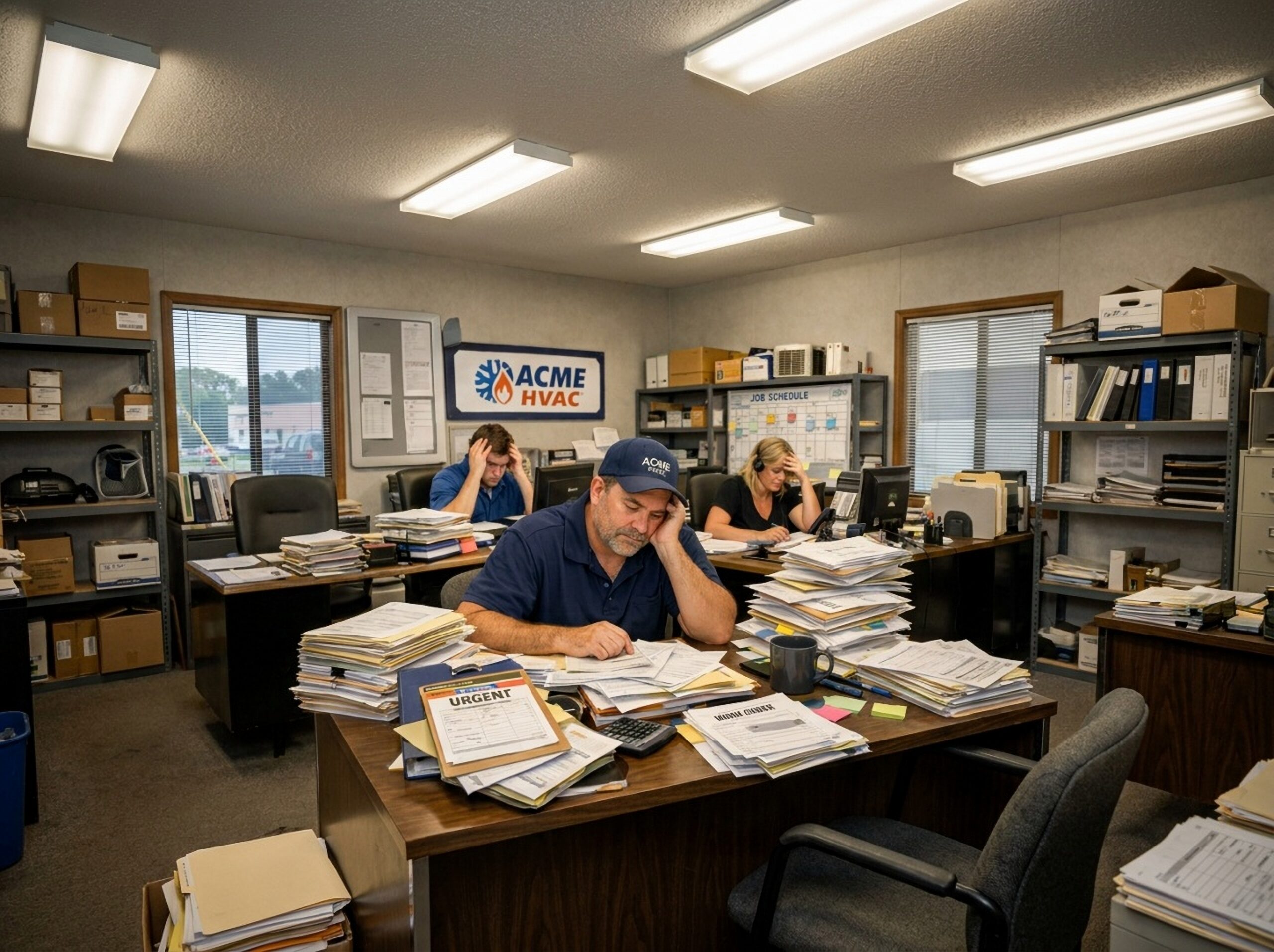
In-House Load Calcs vs Outsourcing: The Real Math for Florida HVAC Companies
For many Florida HVAC companies, outsourcing Manual J load calculations is more profitable than keeping every calculation in-house. The math is simple: if a technician, estimator, comfort advisor, or owner spends hours completing a load calc instead of selling, installing, managing jobs, or handling callbacks, the true cost is often higher than a flat outsource fee.
The decision should not be based only on software cost. It should be based on labor time, hourly burden, opportunity cost, permit delays, revision risk, callback exposure, and how quickly the job needs to move.
For Florida HVAC contractors handling residential replacements, additions, garage conversions, remodels, and new construction, outsourcing Manual J calculations can reduce bottlenecks and help keep permits, proposals, and installations moving.
Direct Answer: When Should an HVAC Company Outsource Manual J?
An HVAC company should outsource Manual J load calculations when the internal cost of producing the calculation is higher than the flat outsource fee, or when the calculation delays permitting, sales, installation scheduling, or job closeout.
Outsourcing usually makes the most sense when:
- Your team does not complete load calculations daily.
- Your technicians are too valuable to tie up in office work.
- You need a 24-hour turnaround for permits or proposals.
- You serve Florida remodels, additions, garage conversions, or new construction.
- You are losing time to software setup, revisions, or incomplete field data.
- You want consistent Manual J documentation without adding an in-house design role.
- Your internal staff is producing calculations, but the process is slow or inconsistent.
Keeping load calculations in-house can make sense for larger HVAC companies with a dedicated designer, consistent plan volume, strong software proficiency, and quality control. For many small to mid-sized Florida HVAC contractors, outsourcing is the more efficient business model.
The Real Cost Formula
The real cost of an in-house HVAC load calculation is not just the hourly wage of the person doing it.
Use this formula:
Internal Load Calc Cost = Time Per Calc × Loaded Hourly Rate + Opportunity Cost + Revision Risk + Callback Risk
That means the true cost includes:
- Labor time
- Payroll taxes and benefits
- Software cost
- Training time
- Management review
- Permit revision time
- Delays from incomplete data
- Lost sales time
- Installation scheduling delays
- Error exposure
- Comfort complaints
- Callbacks
A flat outsource fee is easier to evaluate because the cost is fixed and the turnaround is predictable. The question becomes whether your internal team can produce the same result faster, cheaper, and with less risk.
For many Florida HVAC companies, the answer is no.
Example: The Internal Cost of One Manual J
Assume an HVAC company uses a technician, estimator, or office employee to complete a residential Manual J.
A realistic internal time range may look like this:
| Task | Estimated Time |
| Review plans, photos, or field notes | 20 to 45 minutes |
| Confirm square footage, windows, doors, insulation, orientation, and room layout | 30 to 60 minutes |
| Enter project data into software | 60 to 120 minutes |
| Review outputs and correct data issues | 30 to 60 minutes |
| Prepare documentation for permit or contractor use | 20 to 45 minutes |
| Handle revisions or missing information | 30 to 90 minutes |
That puts many in-house Manual J calculations in the range of 2.5 to 6 hours, depending on project complexity, staff experience, and how complete the field data is.
Now multiply that by the loaded hourly rate.
If the employee costs the company $45 per hour fully burdened, a 4-hour calculation costs $180 in labor before software, revision time, or opportunity cost.
If a senior technician, estimator, or owner is involved, the true cost can be much higher because their time carries production value. A technician who could be running calls, closing replacements, solving field problems, or keeping installations moving is not just costing hourly wage. They are consuming capacity.
The Opportunity Cost Is Usually Bigger Than the Labor Cost
The biggest mistake HVAC companies make is treating load calculations like administrative work.
They are not.
A Manual J may be office work, but the person doing it often has high-value operational knowledge. If that person is an owner, service manager, lead installer, estimator, or comfort advisor, the company may be giving up revenue-producing time to complete paperwork.
That opportunity cost matters.
A load calculation that takes four hours can delay:
- A replacement estimate
- A permit package
- A rough inspection
- A sales follow-up
- A duct design decision
- A job start
- A change order
- A builder response
- A contractor callback
- A homeowner approval
For busy Florida HVAC companies, speed has value. A 24-hour outsourced Manual J calculation can help keep the project moving while internal staff stays focused on revenue and field execution.
The Florida Factor: Remodels Are Not Always Simple
Florida HVAC calculations are often more complicated than a basic square-footage estimate.
Many projects involve:
- Block construction
- Vented attics
- Ducts in attic spaces
- High humidity loads
- Large glass exposure
- West-facing rooms
- Enclosed lanais
- Garage conversions
- Additions tied into existing systems
- Older homes with inconsistent insulation
- Window and door upgrades
- Existing systems that may already be oversized
This is why Florida residential HVAC remodels require careful load analysis. The goal is not just to pass permit review. The goal is to size the system correctly for temperature control, humidity control, airflow, and long-term comfort.
A quick rule-of-thumb calculation may get a number on paper, but it can also create problems. Oversizing can lead to short cycling and humidity complaints. Undersizing can lead to long runtimes and hot rooms. Poor assumptions can create permit delays, failed expectations, and callbacks.
In-House Load Calcs: Where They Work
In-house load calculations can work well when the HVAC company has the right structure.
They are strongest when:
- The company has a dedicated design employee.
- Load calculations are completed every week.
- The team is trained on Manual J standards.
- Field data collection is consistent.
- The company has quality control before submission.
- The software workflow is already established.
- The company handles enough volume to justify the role.
- Turnaround time does not depend on one overloaded person.
In-house control can be valuable. The company owns the process, knows the client, and can connect the calculation directly to equipment selection and duct design.
But this only works when the process is disciplined. If the calculation is squeezed between service calls, installs, sales appointments, and emergency problems, the internal process often becomes slower and riskier than expected.
In-House Load Calcs: Where They Break Down
In-house Manual J calculations usually break down for one of five reasons.
1. The wrong person is doing the work
If the owner, lead technician, installer, or salesperson is doing calculations because “someone has to,” the company may be using high-value labor for a task that could be outsourced at a fixed cost.
2. The work is inconsistent
Manual J requires accurate inputs. If field measurements, window details, insulation assumptions, or room-by-room data are inconsistent, the output becomes unreliable.
3. Software proficiency is weak
Buying software does not create an efficient process. Staff still need to understand the inputs, defaults, assumptions, reports, and common errors.
4. Revisions consume hidden time
Permit offices, builders, homeowners, and internal teams may ask for revisions. Each revision adds cost and delays the job.
5. Load calcs become a bottleneck
If proposals, permits, or installs are waiting on one internal person, the company does not have a calculation process. It has a chokepoint.
Outsourcing Manual J: Where It Wins
Outsourcing Manual J calculations wins when speed, consistency, and fixed cost matter more than keeping the task inside the company.
For Florida HVAC companies, outsourcing is especially useful for:
- Residential HVAC replacements requiring documentation
- New construction HVAC load calculations
- Additions
- Garage conversions
- Enclosed lanais
- Remodels with changed conditioned space
- Permit packages
- Builder support
- Overflow work
- Seasonal demand spikes
- Companies without a full-time designer
The advantage is operational. Instead of pulling a technician or estimator away from production, the company sends the required data to a specialized load calculation service and receives the completed documentation back.
When the turnaround is 24 hours, outsourcing can keep jobs moving without forcing internal staff into late-night paperwork.
Outsourcing Manual J: The Risk Reduction Argument
The cost comparison is not only labor versus fee. It is also risk versus predictability.
An outsourced HVAC load calculation service can reduce:
- Internal labor drag
- Permit submission delays
- Calculation inconsistency
- Revision confusion
- Software training burden
- Bottlenecks during busy season
- Owner dependency
- Missed details from rushed calculations
- Opportunity cost from pulling skilled staff off revenue work
This does not mean outsourcing removes all responsibility. The HVAC contractor still needs accurate field data, proper equipment selection, and correct installation. But outsourcing can create a cleaner documentation process and reduce the internal burden of producing the calculation.
Flat Outsource Fee vs Internal Cost
The comparison should be direct.
| Cost Factor | In-House Manual J | Outsourced Manual J |
| Labor time | Variable | Minimal internal time |
| Turnaround | Depends on staff availability | Often 24 hours |
| Software cost | Company pays | Included in service model |
| Training | Company responsibility | Provider responsibility |
| Revisions | Internal time burden | Depends on provider terms |
| Bottleneck risk | High if one person handles it | Lower with dedicated provider |
| Opportunity cost | Often high | Lower |
| Cost predictability | Variable | Fixed fee |
| Scalability | Limited by staff | Easier to scale |
The key question is not, “Can we do this ourselves?”
The better question is, “Should our best people be spending their time doing this?”
The Break-Even Test
Use this simple break-even test:
If internal time × loaded hourly rate is greater than the outsource fee, outsourcing is financially justified.
Then add the second layer:
If the internal calculation delays a permit, proposal, installation, or inspection, outsourcing may be justified even when the labor cost appears similar.
Example:
- Internal time: 4 hours
- Loaded hourly rate: $50/hour
- Internal labor cost: $200
- Added software/training/revision cost: variable
- Opportunity cost: potentially much higher
- Outsource fee: fixed
In that scenario, outsourcing is usually the better business decision unless the company has a faster, cleaner, dedicated in-house process.
Why 24-Hour Turnaround Matters
Fast turnaround matters because load calculations often sit between the company and the next step.
A delayed Manual J can hold up:
- Permit submission
- Equipment selection
- Builder approval
- Homeowner approval
- Project scheduling
- Installation planning
- Duct design
- Change orders
- Final documentation
For Florida HVAC contractors, one delayed calculation can create friction across the entire job. A 24-hour turnaround helps the contractor respond quickly, submit clean documentation, and avoid becoming the reason the project stalls.
Speed does not replace accuracy. But when the calculation is accurate and delivered quickly, it becomes a competitive advantage.
Manual J Is Not Just a Permit Document
Some contractors treat Manual J as permit paperwork. That is too narrow.
A proper Manual J calculation supports better business decisions. It helps determine whether the system is appropriately sized, whether the existing unit can support added space, whether a garage conversion needs a separate solution, or whether an addition requires duct changes.
Used correctly, the calculation can help the HVAC company:
- Defend equipment recommendations
- Avoid oversizing
- Explain comfort issues to homeowners
- Support higher-quality proposals
- Reduce price-only comparisons
- Improve permit documentation
- Reduce callback exposure
- Sell better-designed solutions
That is especially important in Florida, where humidity problems can quickly become customer complaints.
The Hidden Cost of Errors
The most expensive load calculation is not the one with the highest upfront price. It is the one that creates a bad job.
A poor load calculation can contribute to:
- Oversized equipment
- Undersized equipment
- Humidity problems
- Hot rooms
- Poor airflow
- Excessive runtime
- Short cycling
- Homeowner complaints
- Failed inspections
- Redesign work
- Repeated site visits
- Damaged trust
- Lost referrals
For HVAC companies, callbacks are not just service problems. They are profit leaks.
One avoidable callback can erase the savings from doing the calculation in-house. Multiple callbacks can erase the margin on the job.
When Outsourcing Is the Wrong Move
Outsourcing is not automatically the right answer for every company.
It may not be the best fit if:
- You already have a trained in-house designer.
- Your internal turnaround is consistently fast.
- You complete a high volume of calculations with strong quality control.
- You need constant real-time design collaboration.
- You are unwilling to collect accurate field data.
- You expect an outsource provider to fix incomplete project information.
Outsourcing works best when the HVAC company treats the provider as part of the documentation workflow, not as a dumping ground for incomplete information.
Accurate inputs still matter.
What a Good Outsourced Load Calculation Service Should Provide
A reliable HVAC load calculation service should be clear about what it needs and what it delivers.
For Florida HVAC companies, a strong outsource partner should provide:
- Manual J load calculations
- Fast turnaround, ideally 24 hours for standard projects
- Clear intake requirements
- Room-by-room calculations when needed
- Permit-ready documentation
- Support for additions, remodels, garage conversions, and new homes
- Clear revision process
- Experience with Florida residential HVAC conditions
- Consistent formatting
- Communication that does not slow the contractor down
The goal is not just to buy a report. The goal is to remove friction from the contractor’s workflow.
The Best Workflow for Outsourcing Manual J
The most efficient process is simple:
- Collect the project information.
- Send plans, measurements, photos, and scope details.
- Confirm whether the project is a replacement, addition, garage conversion, remodel, or new construction.
- Provide window, insulation, orientation, and equipment details when available.
- Receive the completed Manual J documentation.
- Use the results for permit submission, equipment selection, or internal review.
The cleaner the information going in, the faster and cleaner the calculation coming out.
What Florida HVAC Companies Should Not Do
HVAC contractors should avoid these mistakes:
- Using square footage only to size equipment
- Guessing on insulation values
- Ignoring window orientation
- Treating garage conversions like normal bedrooms
- Extending ducts without checking load and airflow
- Oversizing equipment to “be safe”
- Waiting until the permit office requests documentation
- Assigning load calculations to whoever is least busy
- Assuming software defaults are accurate
- Letting load calcs delay installation schedules
These mistakes are common, but they are not harmless. They can affect permit approval, system performance, customer satisfaction, and profit.
Bottom Line: The Real Math Usually Favors Outsourcing
For many Florida HVAC companies, outsourcing Manual J load calculations is the stronger operational decision.
The math is straightforward:
- Internal labor is variable.
- Skilled staff time is expensive.
- Software does not eliminate training.
- Revisions create hidden cost.
- Errors create callback risk.
- Permit delays slow down revenue.
- A flat outsource fee creates cost predictability.
- A 24-hour turnaround keeps jobs moving.
If your internal process is fast, accurate, and handled by a dedicated trained designer, keeping load calculations in-house may make sense. But if your technicians, estimators, or owners are losing hours to calculations, outsourcing is often the cleaner and more profitable model.
Outsource Manual J Load Calculations Without Slowing Down Your Jobs
Calc Wizards provides HVAC load calculation services for Florida HVAC companies that need accurate documentation without tying up internal staff.
We help contractors move faster on residential HVAC remodels, additions, garage conversions, new construction, and permit-driven projects with a streamlined outsource Manual J process and 24-hour turnaround for standard projects.
When your team needs the calculation done correctly and quickly, outsourcing keeps your best people focused on the work that actually grows the company.
FAQs About Outsourcing Manual J Load Calculations
Is it cheaper for an HVAC company to outsource Manual J calculations?
Outsourcing Manual J calculations is often cheaper when the internal labor time, loaded hourly rate, software cost, revision time, and opportunity cost exceed the flat outsource fee. The savings are strongest when technicians, estimators, or owners would otherwise spend several hours producing the calculation.
How long does an in-house Manual J calculation take?
An in-house Manual J calculation often takes 2.5 to 6 hours depending on project complexity, staff experience, software proficiency, and the quality of the field data. Additions, garage conversions, enclosed lanais, and remodels can take longer than simple replacements because the conditioned space and building envelope may be changing.
Why do Florida HVAC companies outsource Manual J?
Florida HVAC companies outsource Manual J to reduce internal labor burden, speed up permit documentation, avoid bottlenecks, and keep technicians and estimators focused on revenue-producing work. Outsourcing is especially useful for residential remodels, additions, garage conversions, and new construction projects that require HVAC load calculation documentation.
What is the biggest hidden cost of doing load calculations in-house?
The biggest hidden cost is opportunity cost. When an owner, technician, service manager, or estimator spends hours completing a load calculation, that person is not selling, managing jobs, solving field issues, or keeping installations moving. Revision time and callback risk add even more hidden cost.
Is outsourcing Manual J better than buying software?
Buying software only gives the company a tool. It does not eliminate training, data entry, quality control, interpretation, revisions, or staff time. Outsourcing can be better when the company needs a finished calculation quickly without building and managing an internal design process.
Can outsourced Manual J calculations be used for permits?
Yes, outsourced Manual J calculations can be used for permit documentation when they are prepared with the required project information and formatted for the authority having jurisdiction. Requirements vary by local building department, so contractors should confirm what documentation is needed for each project.
When should an HVAC company keep load calculations in-house?
An HVAC company should keep load calculations in-house when it has a trained designer, consistent calculation volume, reliable field data collection, strong quality control, and fast turnaround. In-house calculations make the most sense when the process is efficient and does not pull high-value staff away from revenue-producing work.
What project types are best suited for outsourced Manual J?
Outsourced Manual J is well-suited for residential HVAC replacements, additions, garage conversions, enclosed lanais, remodels, and new construction. It is especially useful when the project needs fast documentation for permitting, equipment selection, or contractor review.
Why does 24-hour turnaround matter for HVAC load calculations?
A 24-hour turnaround helps HVAC companies avoid permit delays, proposal delays, installation scheduling problems, and builder bottlenecks. Fast load calculation delivery allows the contractor to move the job forward without pulling internal staff away from active work.
What information is needed to outsource a Manual J?
A Manual J provider typically needs plans, measurements, room layout, square footage, ceiling heights, window and door details, insulation information, orientation, project scope, and HVAC system details when available. The more complete the information, the faster and more accurate the calculation.